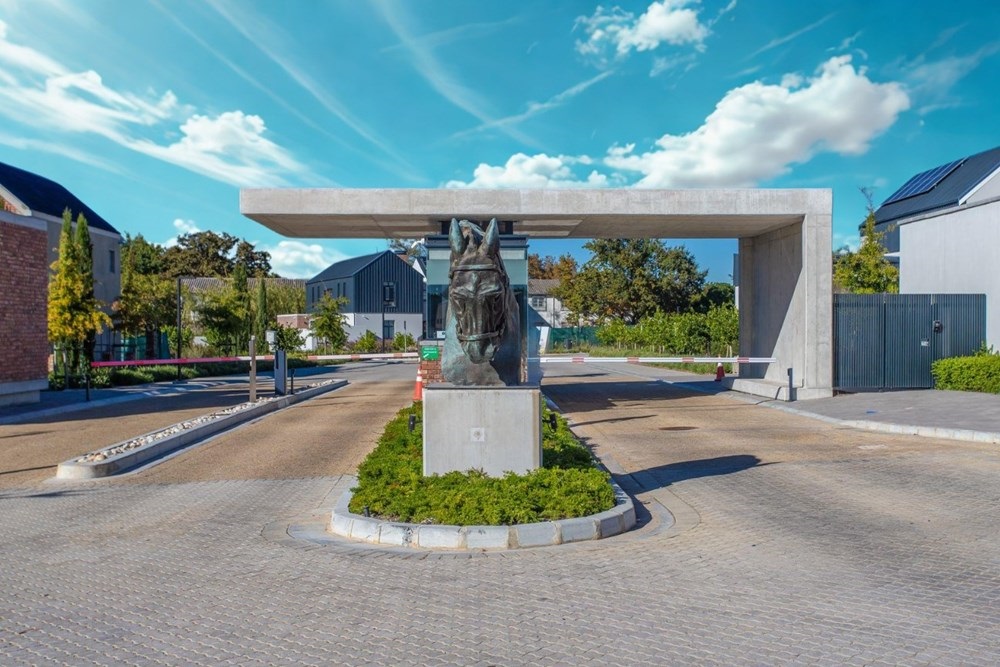
Why income-driven investing matters in uncertain markets
South African property investors are navigating a challenging landscape — rising living costs, shifting interest rates, and economic unpredictability. Here's why focusing on income generation, rather than speculation, is the most resilient strategy you can adopt right now.
Markets never move in straight lines. Anyone who has watched the South African economy over the past few years knows this well — fuel prices surge, load-shedding dents business confidence, interest rates shift, and the rand fluctuates against global currencies. For the property investor, these forces can feel like constant headwinds.
Yet some investors navigate this environment not just successfully, but with genuine confidence. The difference often comes down to a single strategic choice: they invest for income, not just for price appreciation.
What is income-driven property investing?
At its core, income-driven investing means prioritising properties that generate consistent rental income over those you simply hope to sell for a higher price one day. The goal is to build a portfolio where the property pays for itself — and ideally, pays you — every single month, regardless of what the broader market is doing.
This stands in contrast to pure capital-growth investing, where the investor bets on the future sale price being substantially higher than the purchase price. Capital growth strategies work well in bull markets; they become painful in flat or declining markets.
“In an uncertain economy, the investor who gets paid every month sleeps better than the one waiting for a distant payday.”
Why the current South African climate makes income investing essential
RISING COST OF LIVING SQUEEZES DISPOSABLE INCOME
Inflation affects every South African household. When food, energy, and transport costs rise, discretionary spending shrinks. For investors holding properties they plan to sell, a compressed buyer market means fewer qualified purchasers and longer selling timelines. Rental properties, however, respond differently; as the cost of homeownership rises, the rental market strengthens. More people who cannot yet afford to buy will rent, and rents can adjust over time to reflect inflationary pressure.
INTEREST RATE CYCLES CREATE VOLATILITY
South Africa's interest rate environment has been anything but stable. The Reserve Bank's monetary policy decisions directly affect bond repayments and buyer affordability. Income-driven investors who structure their acquisitions conservatively, ensuring rental income covers the bond and operating costs, are largely insulated from rate movements. The property still cash-flows whether rates go up by half a point or down.
CAPITAL GROWTH CANNOT BE GUARANTEED — INCOME CAN BE STRUCTURED
Nobody can reliably predict what a property will be worth in five years. Market sentiment, neighbourhood dynamics, infrastructure developments, and macroeconomic forces all play a role. But a well-located, well-managed rental property in an area with genuine housing demand will generate income month after month. That income is tangible, plannable, and largely within your control as an investor.
6–8% Typical gross rental yield achievable on well-positioned Paarl properties
72% Of South Africans currently renting, representing a deep and sustained tenant pool
12+ Consecutive months of above-inflation rental growth in the Western Cape
The Paarl opportunity: income investing in a growth corridor
Paarl and the broader Cape Winelands region sits at a genuinely compelling intersection: it is both an established lifestyle destination and an expanding residential and commercial hub. The N1 corridor growth, the influx of Semigrants from Gauteng, and the premium that buyers and tenants place on quality-of-life amenities make this area a strong contender for income-focused portfolios.
Demand for quality rental accommodation in Paarl remains robust. Professional families relocating for work, young adults seeking proximity to Cape Town without paying Blouberg prices, and retirees downsizing — all of these create a deep, diverse rental market.
Insider insight: Well-maintained sectional title units in Paarl's established suburbs consistently achieve occupancy rates above 90%, even during economic headwinds. The key differentiator is presentation and management quality; properties that feel like homes attract long-term tenants who pay reliably.
How to build an income-driven property portfolio
The principles are straightforward, though the execution requires discipline and good guidance:
→ Buy below the area's average asking price. Buying well is the foundation of income investing. A property acquired at a fair or below-market price gives you an immediate cushion on yield calculations.
→ Calculate yield before emotion. Never fall in love with a property before the numbers work. Gross yield is rental income divided by purchase price. Net yield factors in rates, levies, insurance, and maintenance. Aim for net yields above 5%.
→ Prioritise tenant-friendly locations. Proximity to schools, transport links, shopping, and employment centres drives rental demand. Properties convenient to daily life attract quality tenants and reduce vacancy periods.
→ Keep acquisition costs in check. Transfer duties, bond registration, and renovation costs all affect your true yield. Structure deals so these costs don't erode your income position before you begin.
→ Work with a property professional who understands investment metrics. Not every agent speaks the language of income investing. Find one who can walk you through market rental data, vacancy rates, and area-specific demand drivers.
→ Plan for the long term. Income investing rewards patience. A property that yields 6% annually compounds meaningfully over a decade, and rental growth will often push that yield higher relative to your original purchase price.
The psychological advantage of income investing
There is a dimension to income-driven investing that financial metrics alone cannot fully capture: the peace of mind that comes from knowing your investment is working every month, not waiting for a future event.
When markets dip, and they will, the capital-growth investor experiences a paper loss and must decide whether to hold or sell at a potentially unfavourable price. The income investor, meanwhile, continues to receive rent. The investment serves its purpose regardless of what the market does on any given day, quarter, or year.
In a world shaped by uncertainty, predictability is an underrated luxury.
“A property that pays you monthly is a resilient asset. A property you’re simply hoping will be worth more is a bet.”
Where to start
If you are considering property investment in Paarl or the surrounding Cape Winelands, whether this is your first investment property or you're looking to grow an existing portfolio, the most valuable first step is a frank conversation about the numbers.
I work with investors who want to make decisions grounded in data: current rental market conditions, realistic yield expectations, and area-specific demand insights. My approach is about helping you find properties that work financially, not just properties that look appealing on paper.
Whether you are exploring buy-to-let opportunities, considering multi-unit properties, or looking at whether a specific listing makes sense as an investment, I am here to help you think it through clearly.
Let's talk investment strategy
Ready to explore income-driven opportunities in Paarl and the Cape Winelands?
Get in touch for a no-obligation conversation.
delicia.vanwyk@expsouthafrica.co.za | deliciavanwyk.expsouthafrica.co.za